

The boat is almost full! There are only two spaces left out of 14 left on the January 2024 photography workshop in the Galápagos that I am leading with Emily Carter. This is an incredible opportunity to experience the islands and the incredible wildlife photography both underwater and on land. For this trip I have partnered with Holbrook Travel to provide the most comfortable and authentic international travel experience. The ten-day trip includes eight days in the Galápagos on a private yacht with multiple photography excursions to different islands each day and a full day of shooting in Quito, Ecuador at the beginning of the trip.
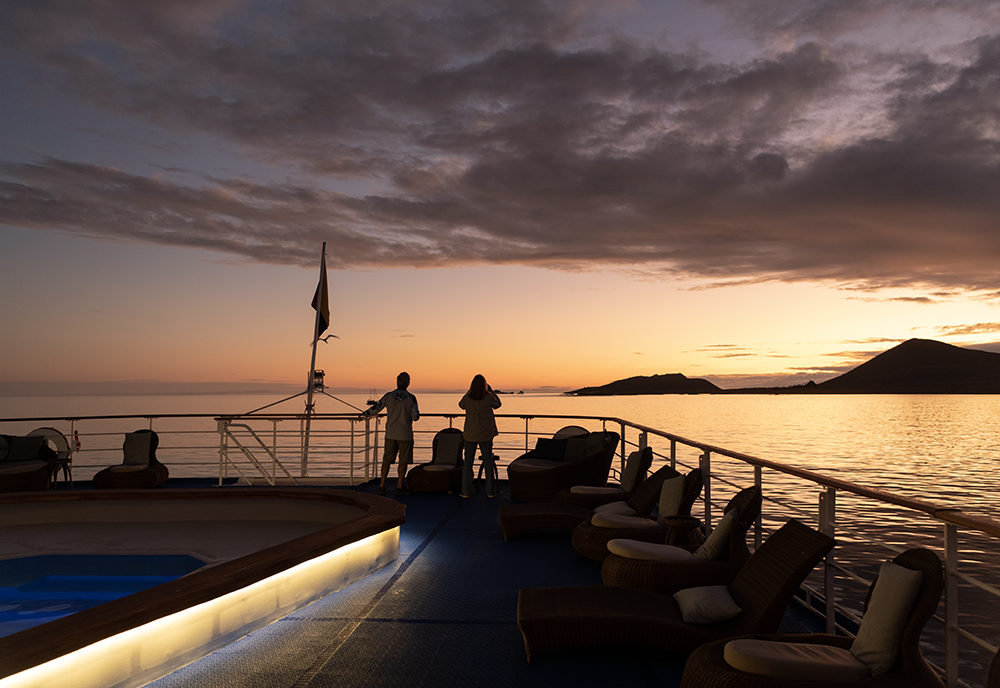
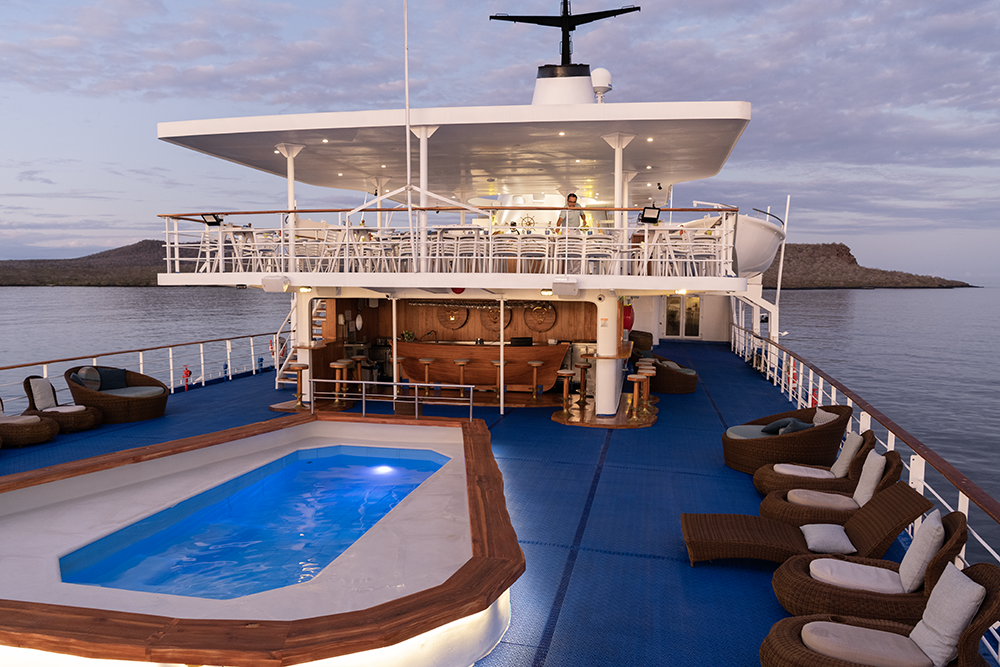
Cruising onboard the Galápagos Legend
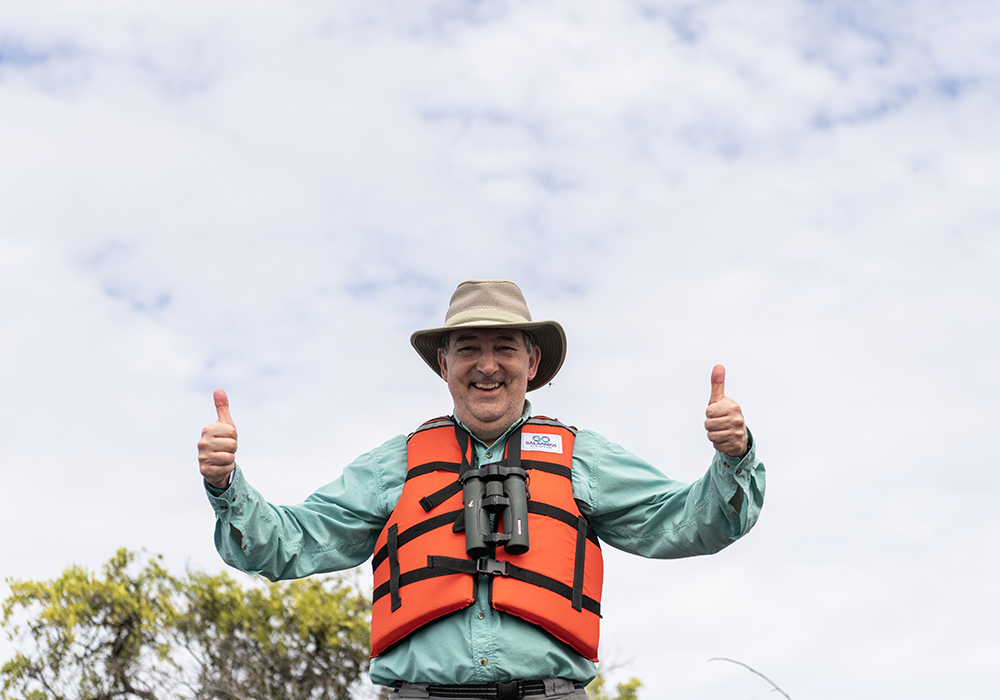
I was invited to join Holbrook Travel in late January 2023 on a five day trip to the Galápagos Islands off the coast of Ecuador. The 11 travelers and I were recruited for this ‘FAM’ trip as group leaders. Holbrook offers these FAM trips to familiarize leaders with company’s offerings with hopes that they will work with Holbrook as trip leaders in the future. Our group was made up of five expert birders, three photographers, two travel professionals, a fisheries scientists, and a college professor - all with prior experience in leading trips.
After spending two nights in Quito - Ecuador’s capital city - we flew into San Cristobal Island and boarded the Galapagos Legend. The legend is a 301 foot steel hull ship that worked as a hospital ship in the Vietnam War and then as a passenger ship in the Baltic Sea before being converted into a luxury cruise ship in 2002. The ship runs four different island hopping routes throughout the Galápagos. Our cruise was set to do the southern route, visiting San Cristobal, Espanola, Floreana and Santa Cruz for twice daily excursions to the islands via zodiac.

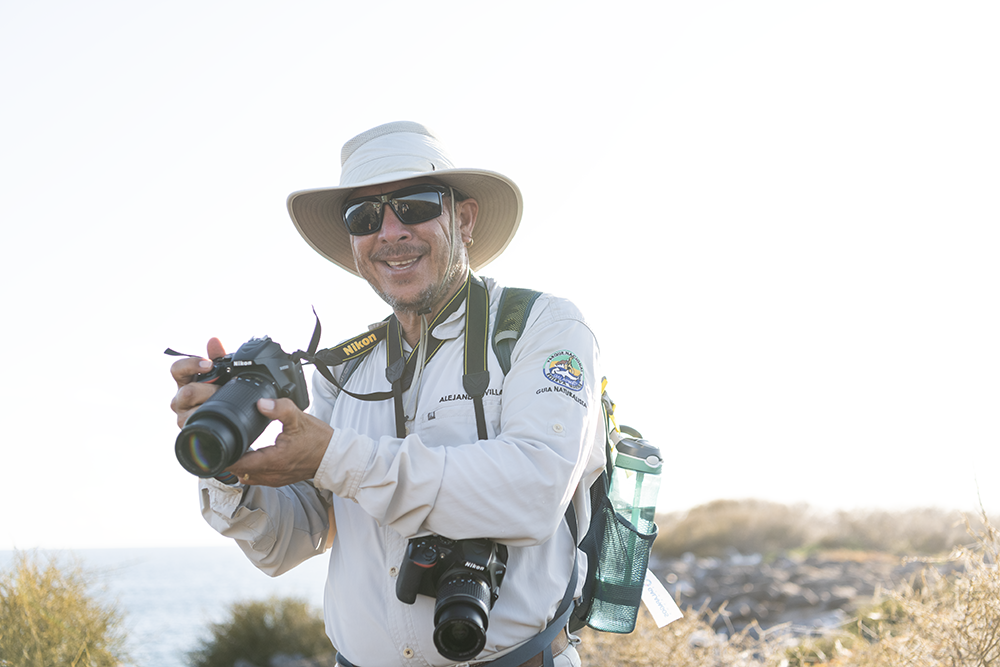
Our first stop after departing Puerto Baquerizo Moreno on San Cristobal was Espanola Island. This remote uninhabited island is home to a large nesting colony of nazca boobies and the only nesting colony of waved albatross in the archipelago. We arrived about two months early to see the albatross nesting but the boobie nesting season that runs from November to February was in full swing. After landing on the island our guide Alejandro Villa led us on a two-mile hike around the perimeter of Punta Suarez on the western side of the island. The trail cut directly through the colony of nesting nazca boobies. Nests were set up on the edge of the trail and in some cases in the middle of the trail - the birds were seemingly unfazed by presence of the tour groups that visited the island. The birds were sitting on eggs and had chicks at different stages of life. As the group hiked further down the trial we saw different bird species nesting on the interior of the island and along the cliffs - the Galapagos hawk an endemic species to the islands, blue footed boobies, swallow tail gulls and tropic birds. After circumnavigating the trail at Punta Suarez we boarded the zodiac and boarded the Galápagos Legend.
The ship ran between the different islands in the evening as the passengers ate dinner and settled into the cabins for the night. Our next stop was Floreana, a small inhabited island approximately 30 miles to the west of Espanola. We woke up in the morning at Post Office Bay and boarded the zodiacs for the morning’s snorkeling excursion. We disembarked the zodiac a small beach along the edge the protected bay. On the northern side of the beach was a rocky shoreline with an abundance of marine life - Pacific green sea turtles, white tip reef sharks, Mexican hogfish, parrotfish and dozens of other fish species. After an hour of snorkeling, the group loaded up on the zodiacs and ran back to the ship for lunch. The afternoon excursion consisted of a deepwater snorkel at Devil’s Crown - a rock offshore of Floreana and a hike to see nesting sea turtles at Punta Cormorant.
On the fourth day off the trip we woke up fifty miles to the north on Santa Cruz just offshore of a hiking area known as Dragon Hill. After disembarking the zodiacs, we walked along a small beach and past a lagoon. On the beach and in the adjacent lagoon we were able to photograph American flamingos, American oystercatchers, black-necked stilts and the endemic lava heron. As we walked up the trail, further into the island’s interior, we spotted different endemic species of finches and the Galapagos flycatcher. Land iguanas were abundant, feeding on fallen fruit from the endemic species of cactus - Optuni galapegeia . After the two mile hike at Dragon Hill we disembarked the island on the zodiac and ran back to the ship for lunch. The afternoon excursion was a snorkeling trip at Punta Bowditch - a small white sand beach just to the south of the Dragon Hill landing. In the water there were different species of parrotfish, Mexican hogfish and giant schools of black-striped salema. Back on the ship the guides prepared a presentation of photographs and video clips taken during the cruise - it was a great entertaining way to reminisce on the experiences of the cruise.
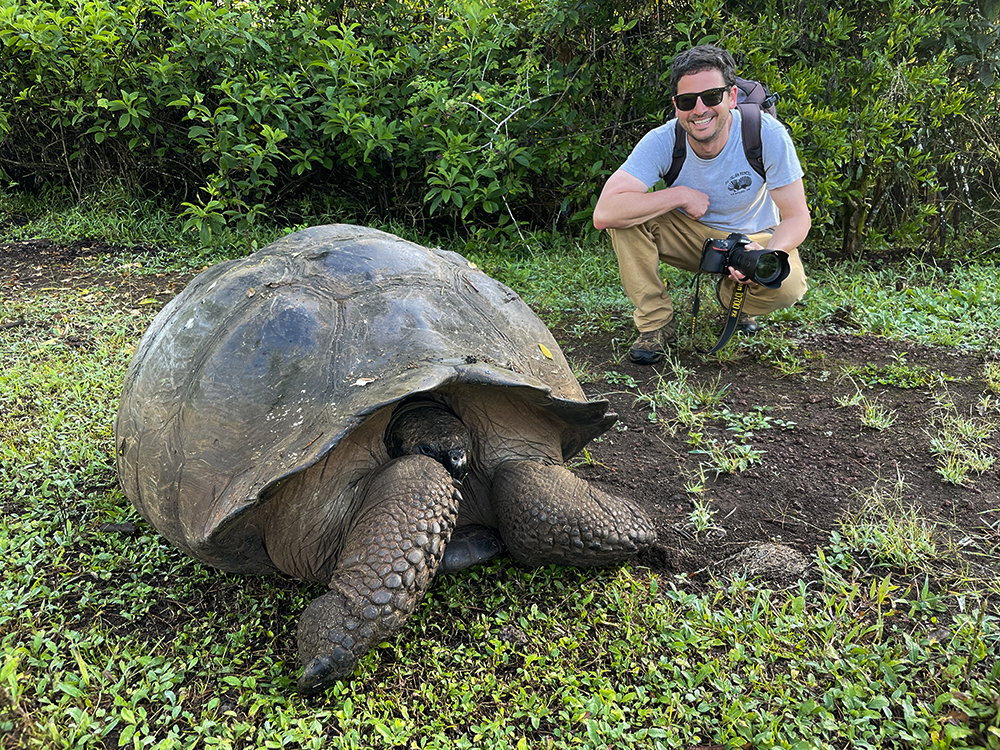
On day five of the cruise the guides had the group up early to prepare to depart to Santa Cruz for the final excursion of the trip. We loaded the our luggage and gear onto multiple zodiacs and headed towards the Itabaca Channel - a small passage between Santa Cruz and Baltra. We disembarked on the Santa Cruz side of the channel and loaded into a small bus that ran us to El Chato ranch in the interior highlands of the island. At the ranch, there were dozens of Galápagos tortoises roaming the property. The tortoises are an iconic species to the archipelago found on seven of the islands. The Galápagos tortoises are known for their long lives - documented up to 177 years in captivity and more than 100 years in captivity.
After the visit to El Chato ranch I parted ways with the group before they flew back to the mainland for three additional days of birding and wildlife excursions in the Cloud Forest region of Ecuador. I had made plans to stay in the Galápagos on my own for two additional weeks after this trip to focus on underwater photography and the documenting culture of the islands. Additionally, I was hoping to build an extensive portfolio of work from the Galápagos and become more familiar with the islands in preparation for offering a photography workshop through Holbrook in January 2024. The official posting and details about next years Galapagos workshop will be released in March 2023.
Photographs from the cruise on the Galápagos Legend with Holbrook Travel and from the solo portion of the my trip can be seen in the three blog posts linked here - Galápagos Wildlife, Galápagos Landscapes and Galápagos: Way of Life.



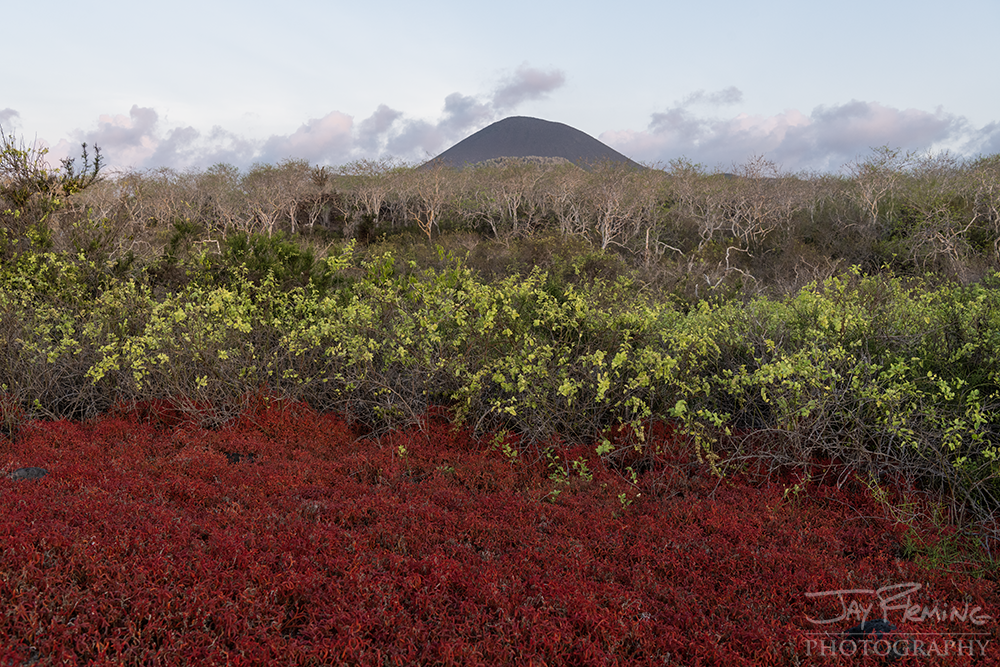
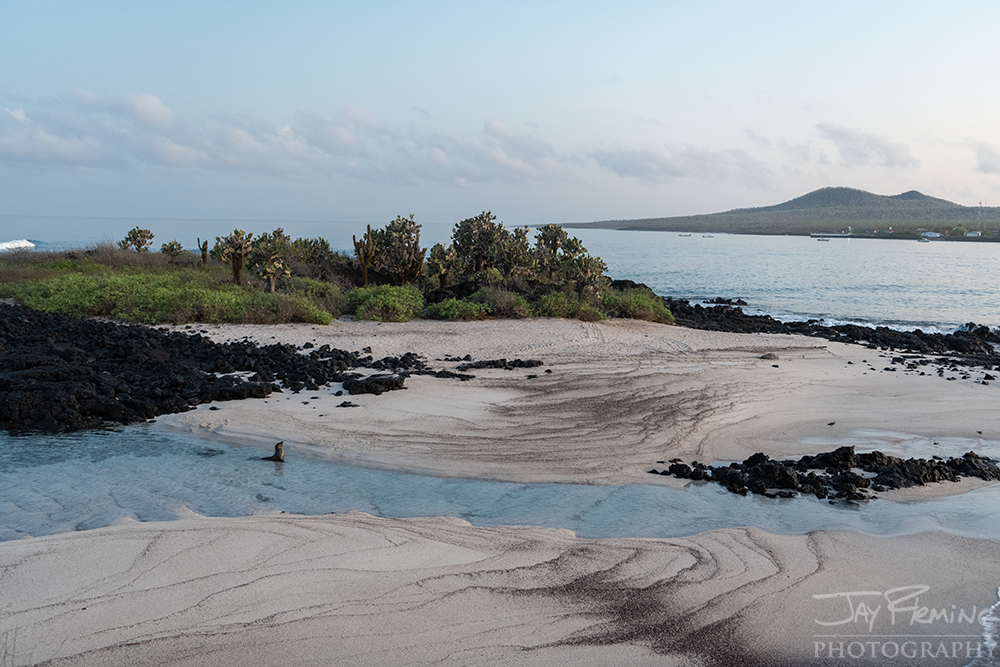
Landscapes of the Galápagos Islands





Galápagos Wildlife

A Galápagos sea lion swims near the surface at Isla Pinzon.
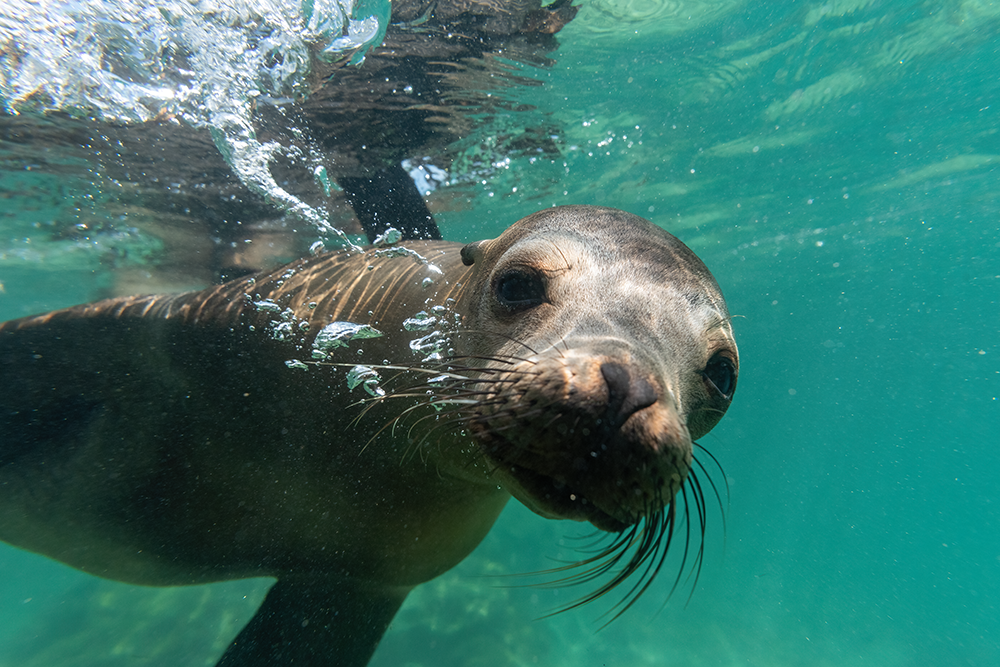
A Galápagos sea lion checks out the camera in the shallows Concha de Perla on Isabela Island.

A pod of bottlenose dolphins swims near the surface of the water at Isla Seymour Norte.

A whitetip reef shark swims in a cave at Los Tuneles on Isabela Island.

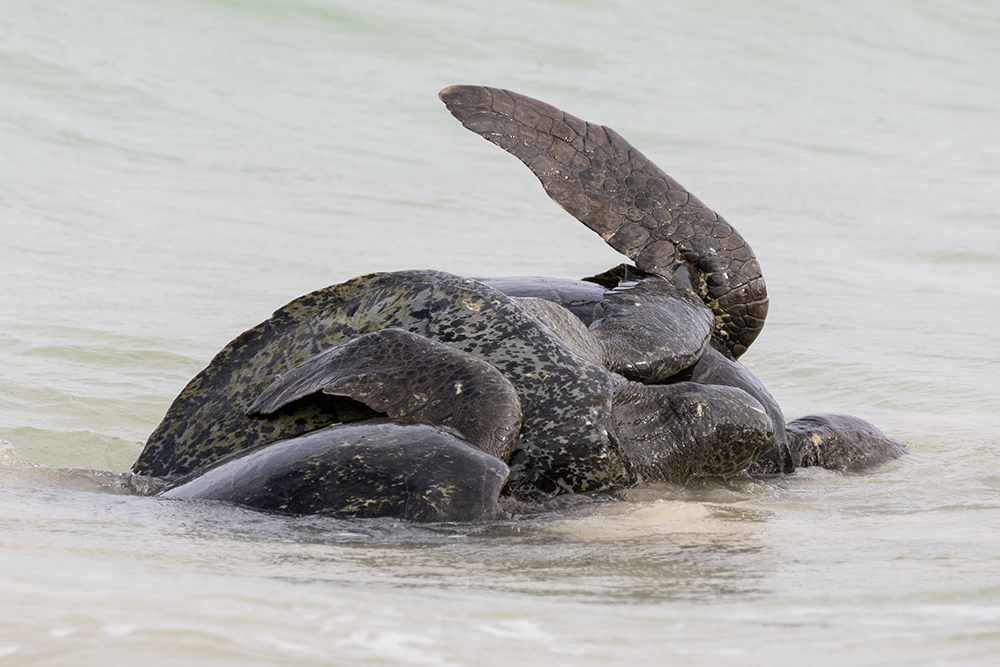
A Pacific green sea turtle swims near the surf of the water at Post Office Bay on Floreana Island. Below: Pacific green sea turtles mate just off the beach at Punta Cormorant on Floreana Island.


Pacific green sea turtle and a school of rainbow wrasse feed on algae on the southern shore of Isabela Island.

A Pacific green sea turtle feeds on algae at Post Office Bay on Floreana Island.

A Mexican hogfish, known on the islands as a ‘vieja’ swims near the beach at Post Office Bay on Floreana Island.

A school of yellow-tailed surgeonfish swim near the rocks at Isla Seymour Norte.
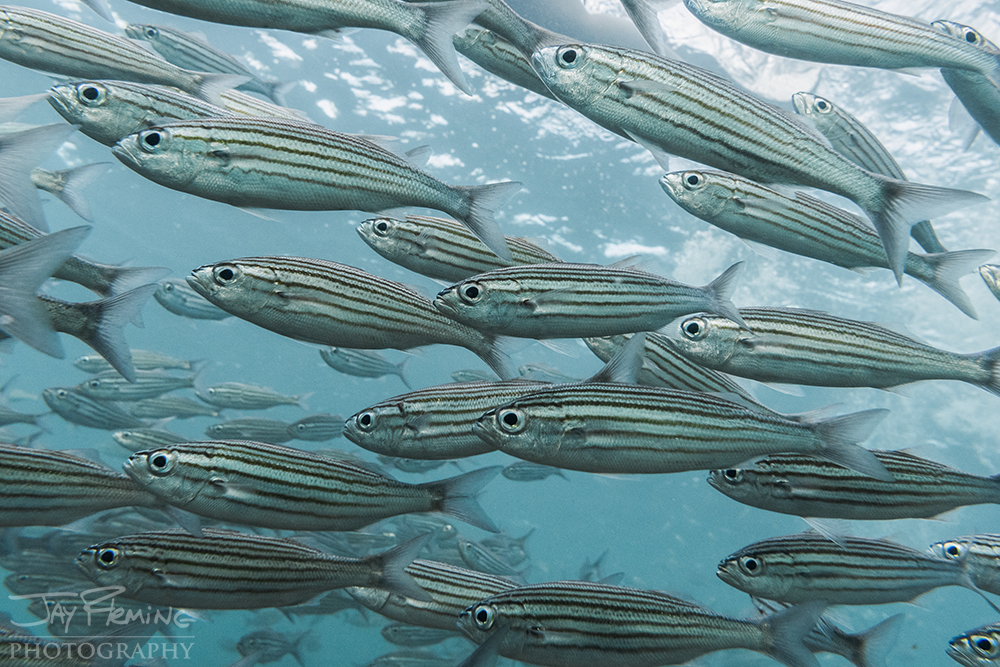
A school of striped salema swim below the surface at Bahia Conway on Santa Cruz island.

Bumped Parrotfish feed on algae at Isla Seymour Norte.

A school of bluechin parrotfish feeds on algae growing on rocks near the shoreline of Isla Pinzon.

A pair of white-tailed damsel swim behind a congregation of green sea urchins near La Loberia on Floreana Island.

A Pacific seahorse conceals itself amongst a clump of marine grass at los Tuneles on Isabela Island.

A bravo clinid rests on a rock adjacent to the shoreline at La Loberia on Floreana Island.

A sally lightfoot crab crawls on an igneous rock on the shoreline at Punta Cormorant on Floreana Island.

A marine iguana walks along the edge of the beach at Tortuga Bay on Santa Cruz island.

A Galapagos mockingbird perches atop a marine iguana on the shoreline of Espanola Island.

Detail of a marine iguana back at Puerto Velazco Ibarra on Floreana Island.

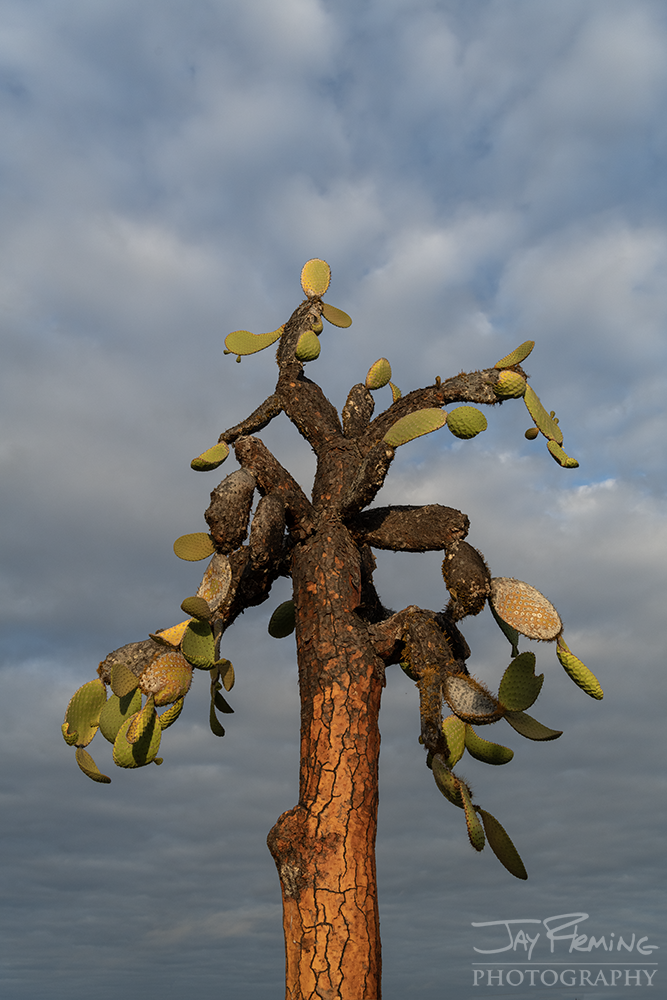
A Galapagos land iguana feeds on a flower from an opuntia - a prickly pear cactus - on the lowlands of Santa Cruz island.


Galapagos tortoises at el Chato Ranch on Santa Cruz island and at the tortoise breeding center on Isabela island. The Galapagos tortoises are native to seven different islands in the Galapagos archipelago. There are 13 subspecies of the Galapagos Tortoise with each varying slightly in size and physical characteristics. Galapagos tortoises have been documented living up to 175 years in captivity and more than 100 years in the wild.

Blue-footed boobies display courtship behavior at a nesting colony on Espanola island.

A blue-footed boobie cleans itself along the cliffs at Espanola island.

A nazca boo0bie protects a single egg on its nest at a large colony of nesting boobies at Punta Suarez on Espanola island.
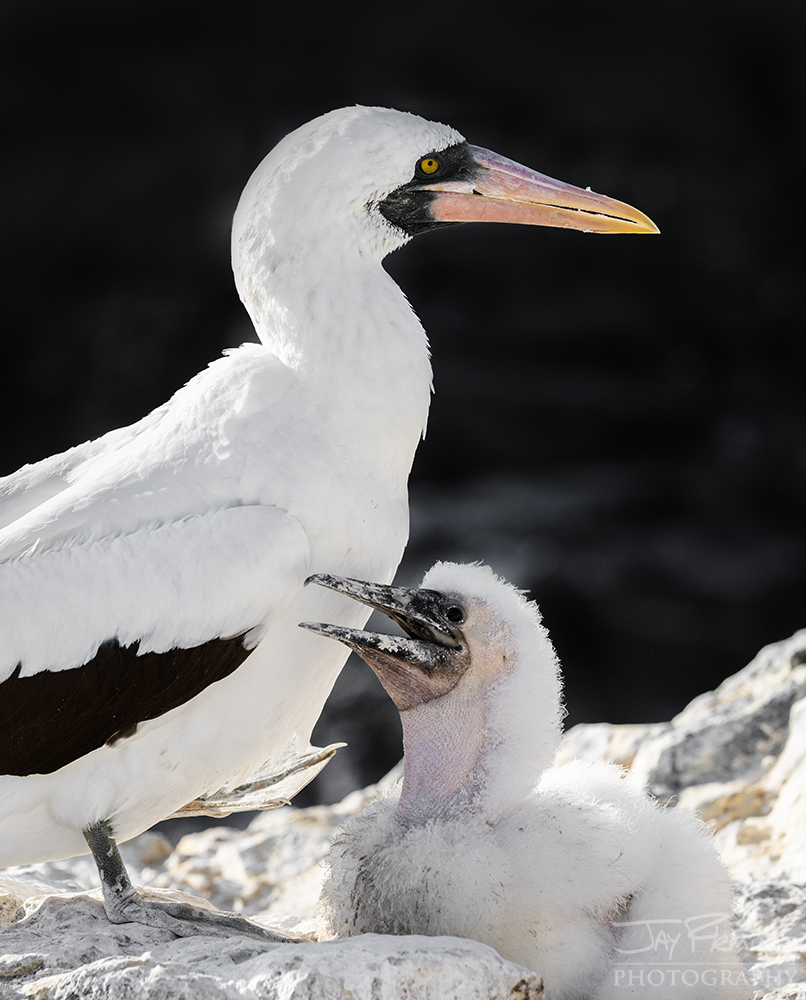
A nazca boobie adult and chick at a large colony of nesting boobies at Punta Suarez on Espanola island.

A male magnificent frigate bird displays the iconic red pouch at a large nesting colony of both great and magnificent frigate birds on Isla Seymour Norte. Below: An American flamingo, a black necked stilt, an American oystercatcher and a lava heron forage and rest along the shoreline of Santa Cruz. island near Dragon Hill.


An American flamingo preens after feeding in a small lagoon on Floreana island. Below: Yellow crowned night heron details from the shoreline of Floreana island.


A yellow crowned night heron forages at first light along the shoreline of Tortuga Bay on Santa Cruz island.

A Galapagos mockingbird perches on a branch while foraging in the lowlands of San Cristobal island. The Galapagos mockingbird is an endemic species that is widespread in the archipelago. There are six subspecies of the Galapagos mockingbird that are found on particular islands.