

I had the opportunity to present U.S. Senator Chris Van Hollen with a copy of 'Working the Water' for the conference room decorated with prints from the book. It was great being able to talk with him about the Bay's seafood industry and share stories from the book. Senator Van Hollen is optimistic about the future of Maryland seafood, just like his predecessor U.S. Senator Barbara A. Mikulski.
Prop Talk - Jay Fleming's "Working the Water"
Jay Fleming’s book, “Working the Water,” is a visual narrative of the individuals whose lives are directly dependent upon the Chesapeake Bay. His name should come as no surprise to our readers, as his photos have graced the covers of both PropTalk and FishTalk (the premier issue), and we eagerly awaited the release of his book last fall. With “Working the Water” now in its second printing, Fleming had some time to chat with us about his methods and inspiration. Learn more about the photographer and find the link to purchase his book at jayflemingphotography.com.
How did you compile the many photos in your book?
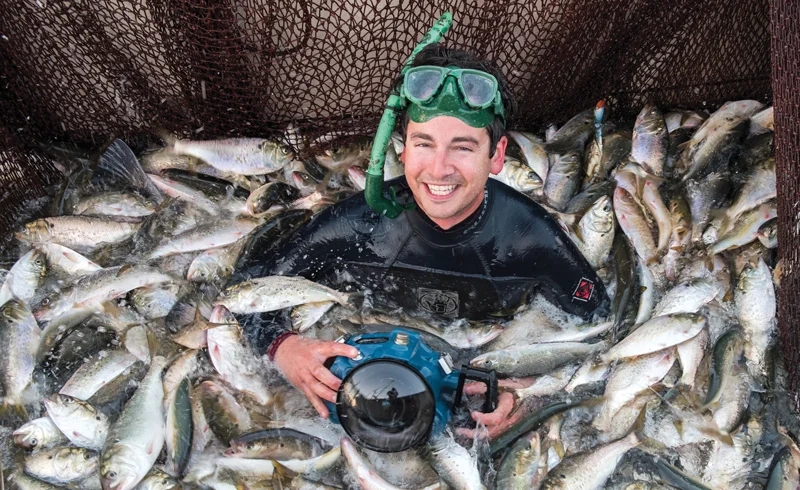
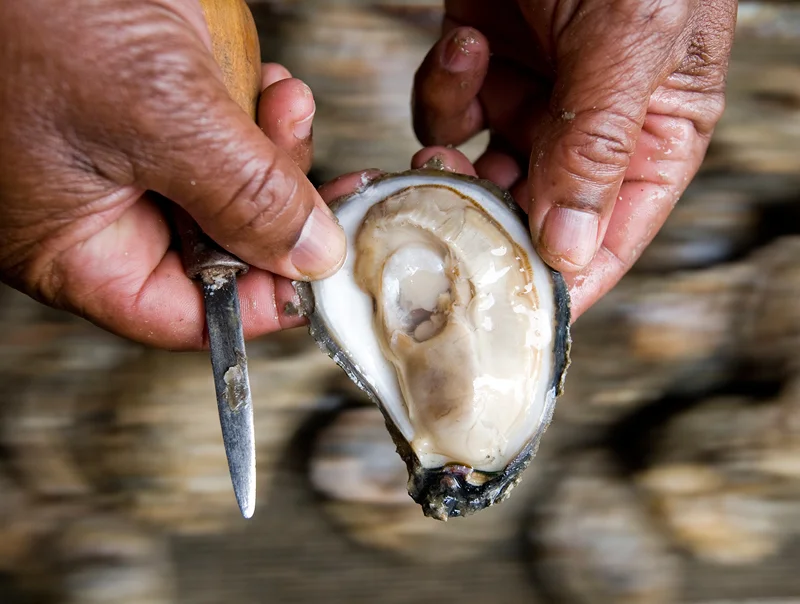
There are 300 photographs in the book which is organized chronologically by season, starting in the spring and ending in the winter. It starts with the Bay coming to life in the early spring, with the watermen targeting white and yellow perch in the Bay’s tributaries. As the waters warm, the book shows how the watermen switch gears into different fisheries and how the biodiversity of the Bay changes with the season. IT ends with a chapter about ice breaking, illustrating how an ‘ice-up’ affects a waterman’s ability to work. Within the four chapters (seasons), there are 36 subchapters, each illustrating a different aspect of the Chesapeake Bay seafood industry.
Were there any photo excursions that stood out from the rest?
One of the most memorable trips on the water was a gill netting trip out of Tilghman Island. Gill netting for striped bass in Maryland is done during the winter months, December through the end of February. On the cold day in January that I decided to go out, it was forecasted to snow in the afternoon. I thought the snow would be a nice environmental addition to the photographs, illustrating the difficult nature of the working conditions. When the snow did start, the wind did also. The watermen were picking up their nets with the stern of the boat into the wind and tide, which created freezing spray. It was difficult to shoot pictures in the adverse weather, but the images of the watermen covered in ice were very effective in telling the story of their work. The watermen picked up their nets as quickly as possible, and headed for shore.
When we got to the dock, I was ecstatic to be on land. The captain of the boat jokingly remarked that he had “never seen someone get off of a boat so quickly.” The images from that cold January day in the mainstem of the Chesapeake Bay were and still are very memorable. That day helped me come to a new level appreciation of what some people will do to make a living. The photographs from captain Jerry Janda’s boat are featured in the Winter Gill Netting chapter of “Working the Water.”
It sounds like you’ve traveled quite a bit, photographing different regions. What made you decide to do a book on the Chesapeake Bay?
I have traveled to quite a few different countries to create unique photographs and learn about different cultures. Most recently I spent a month in Cuba photographing the people, wildlife, and landscapes of the unique island. Even after experiencing so many unique and eye-opening things, my passion for photography lies with the Chesapeake Bay.
The Chesapeake is something that so many people hold close to their hearts. It is an area rich in history, culture, and wildlife. Many people living within the Chesapeake Bay watershed do not get to experience what I have photographed and what the watermen do everyday. The iconic seafood of the region — crabs, fish and oysters — is something that anyone can relate to. My goal in doing a book on the Chesapeake Bay was not only to create something that showed the current state of the seafood industry, but also to educate people as to how the different seafood products come to the table and about the environment that they come from. I am from Annapolis, MD, and I have always considered the Chesapeake Bay my ‘backyard,’ so it only seemed natural to pursue a project that I was truly interested in.
Do you have a take-away message for your readers?
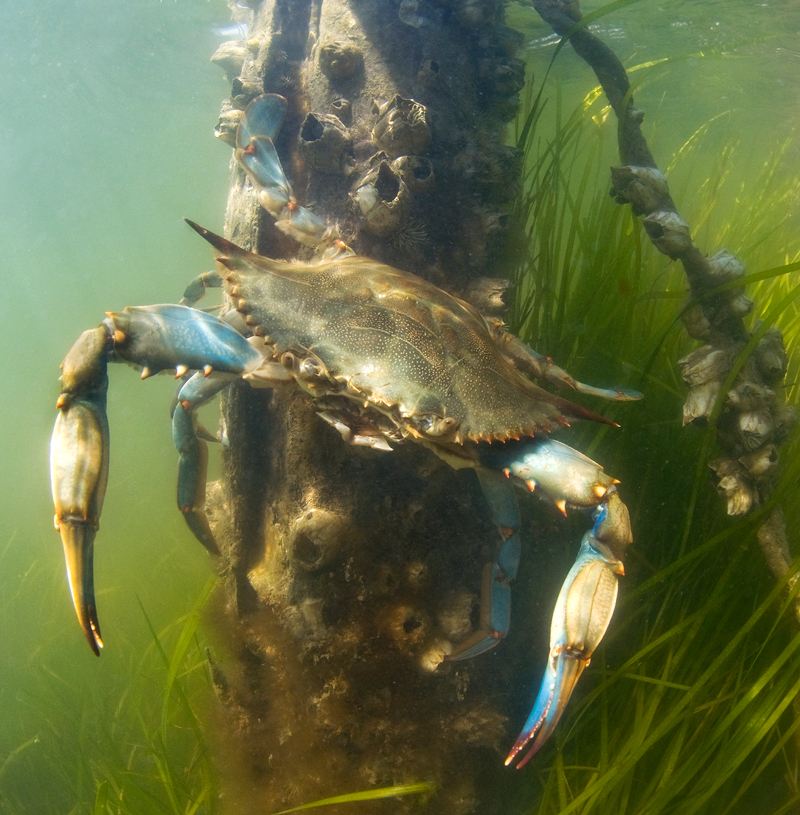
One of the biggest take-away messages for me from creating “Working the Water” is that the Chesapeake Bay is an incredibly diverse ecosystem that still supports a vibrant industry. I had a preconceived notion that the Chesapeake Bay seafood industry was only a small fraction of what it once was and that it was ‘dying.’ After traveling up and down the Bay, from Havre de Grace to Hampton Roads to different coastal communities, I came to the realization that the industry has been adapting to the times. There are many factors that have effected the industry over the last few years such as the cost of operation, regulations, environment, availability of labor, and the change in the industry has been a reaction to these factors. The industry will always be around due to the demand for the iconic seafood that is supplied by one of the world’s most productive estuaries.

Chestertown Spy - Working the Water - Video Interview
“It is hard not to be a bit unnerved by how young Jay Fleming is after seeing his extraordinary work of photography. While only thirty years old, Fleming has produced a portfolio that shows a maturity and mastery that should match up with someone twice his age.
Perhaps one of the reasons for this surprising contradiction is the fact that he is the son of Kevin Fleming, whose photographs graced the pages of National Geographic for much of the 1980s and 1990s. But the other compelling factor was Jay’s fascination and love of the Chesapeake Bay region from the moment he was first taken out on the water as a child.
Regardless of some of these co-factors, the fact remains that Jay Fleming has very quickly earned the reputation as being part of a new generation of award-winning photographers devoted to recording realistic portraits of men and women working on the water.
The latest example of this booming career is the recent release of Working the Water, a stunning 280-page photography book that chronicles the life and work of watermen from the most northern part of the Chesapeake Bay to the furthest South.
A few weeks ago, the Spy visited Jay in his new studio space in Annapolis to talk about his disciplined approach to the art of photography.”
Exhibit Opening - Annapolis Maritime Museum
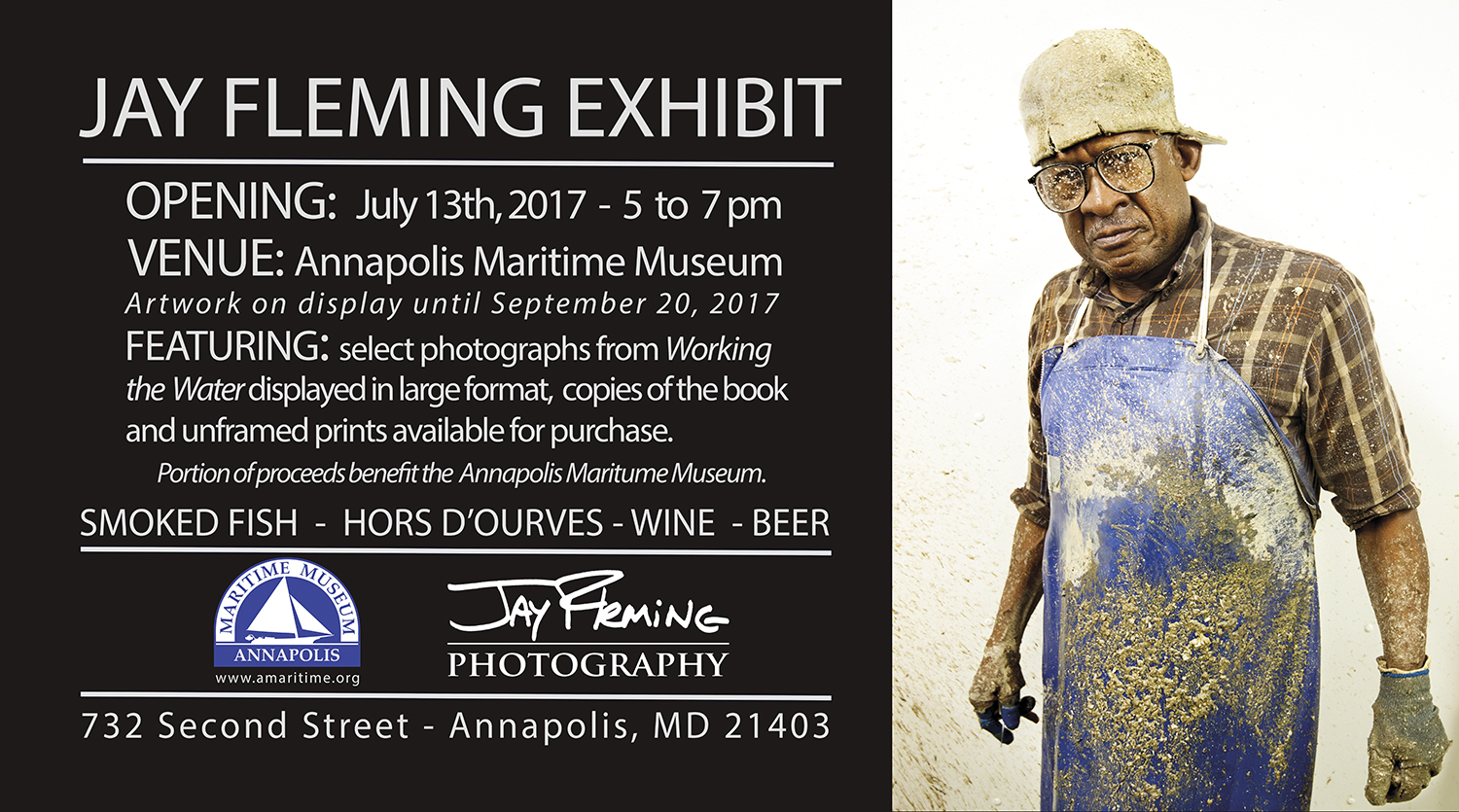
Opening Reception - Thursday July 13th - 5 to 7pm - Annapolis Maritime Museum
Join me next Thursday for an opening reception for the new exhibit that will be hanging at the Museum until September 20th. The exhibit features oversize prints from 'Working the Water' and from other adventures on the Chesapeake Bay.
Smoked Fish from Ivy City SmokeHouse Tavern & Market, Beer/Wine and hors d'ourves will be complimentary to all guests. The event will coincide with the 'Tides and Tunes Summer Concert Series' featuring the Timmie Metz Band